1
February
2026
Research out today suggests Thailand’s flagship food producer could reduce emissions, save on costs and boost ESG ratings and company value with a moderate shift to plant protein production.
As the region’s biggest animal protein producer and a top global chicken exporter, CP Foods (CPF) stands out as the only meat company in Thailand to set Science Based Targets (SBTi).
However, if it stuck to business as usual, the food giant would miss its 2030 climate commitments.
The new research, commissioned by Madre Brava from Profundo, points to a solution that could satisfy the company’s business and sustainability interests: a moderate shift to plant protein production while maintaining sustainable animal products. Such a move would help it become one of the leading sustainable food companies in Thailand and the broader region.
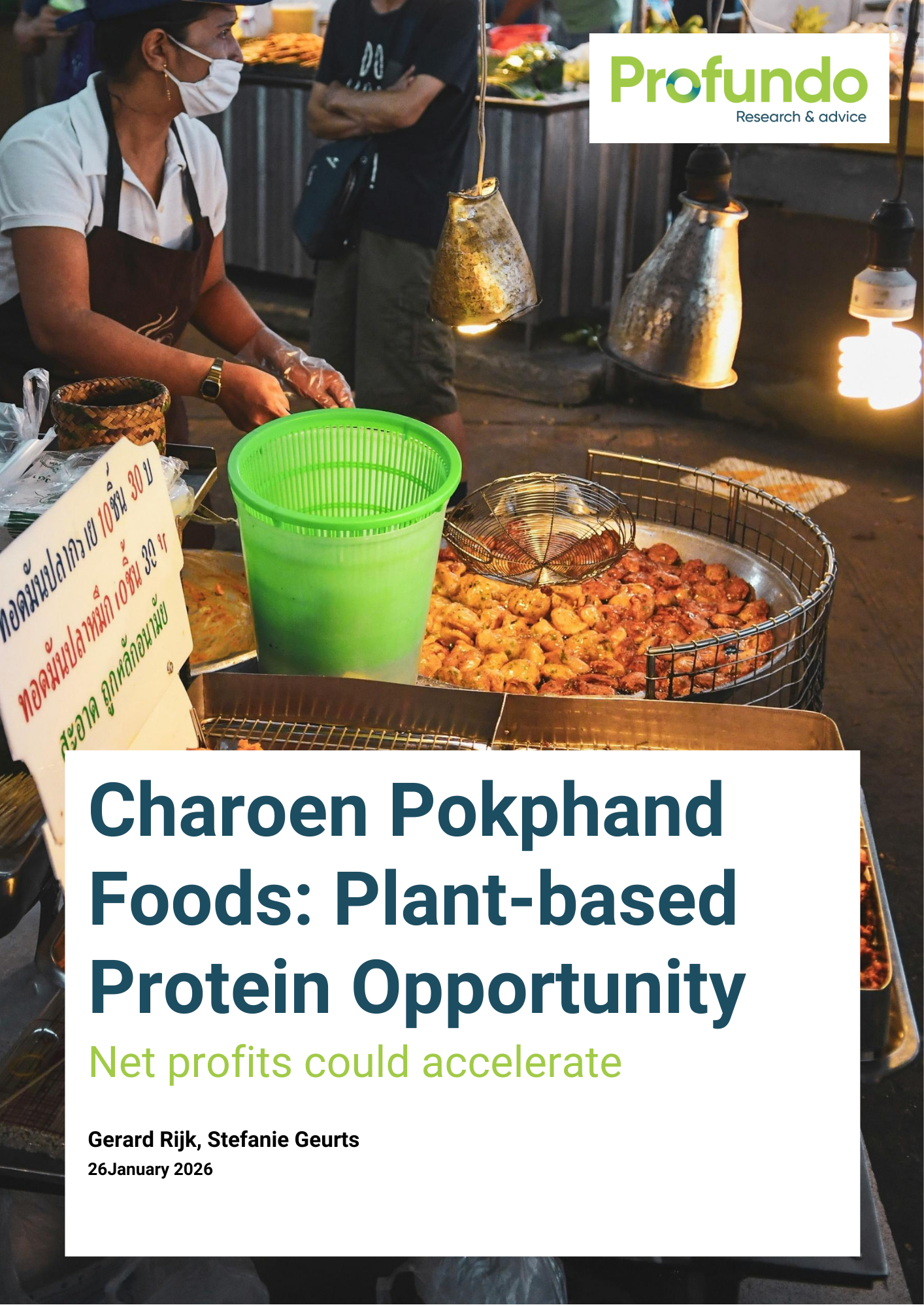
Profundo's analysis calculated greenhouse gas emissions from pork, chicken, and dairy production throughout CPF's global supply chain, comparing them to the company's SBTi targets.
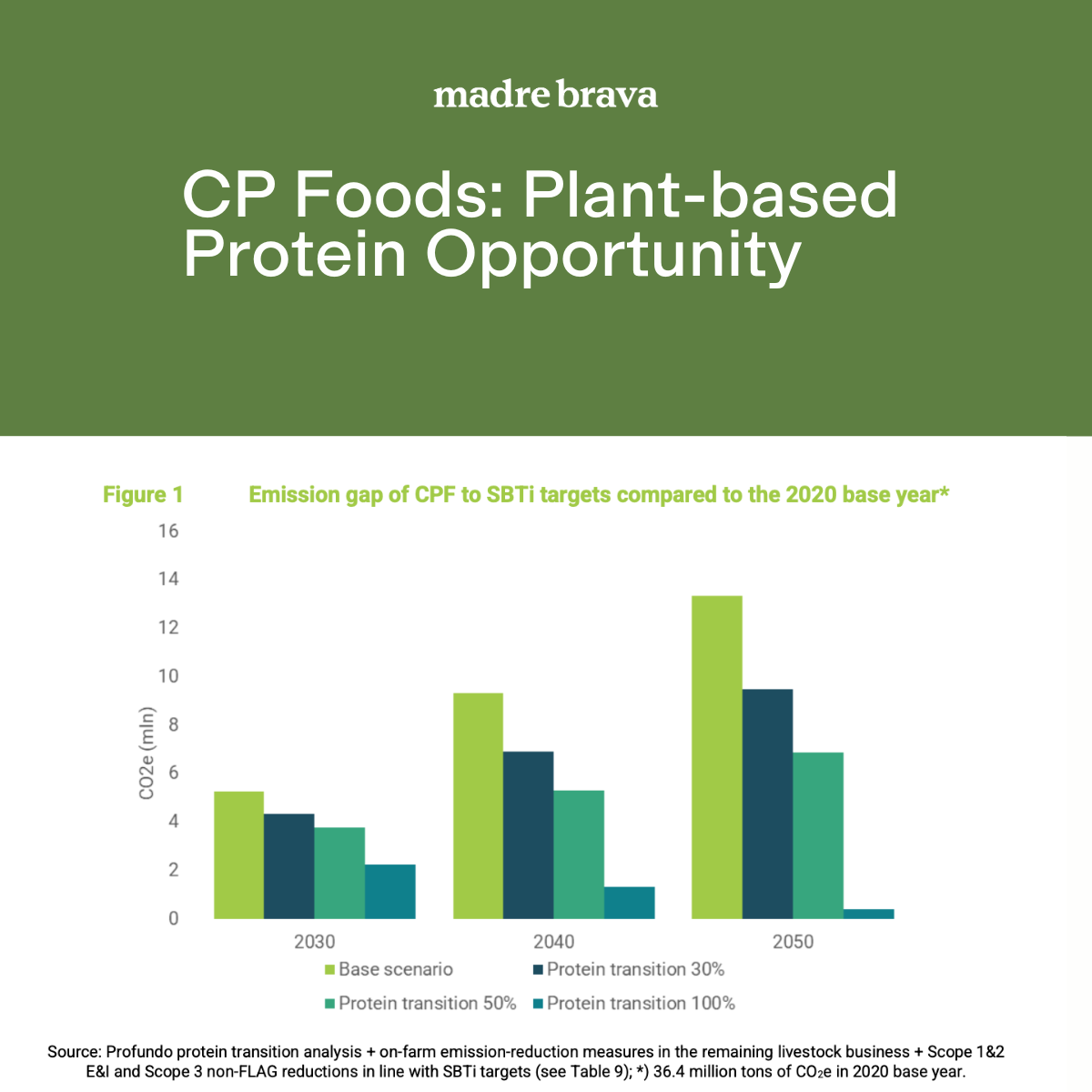
The report found that the implementation of all on-farm measures to reduce emissions from livestock, combined with a gradual transition towards plant-based protein production (12% of their total production by 2030), would significantly reduce the climate impact of CPF’s entire supply chain and help the company to get closer to meeting its 2030 climate targets (70% of the target).
However, a more ambitious shift is needed for CPF to meet its own climate targets. The report indicated that the 23% shift to plant proteins by 2030, along with appropriate on-farm mitigation measures, would enable CPF to meet the climate targets. On-farm mitigation measures in livestock activities include, manure management, feed additive, and renewable energy.
Plant-based protein production adds to profits, reduces capital use and debt
A shift to more plants in the company’s supply chain could increase net profit and the company’s value in the stock market. Plant protein can reduce production costs, as it uses less input (fertilizers, pesticides, no antibiotics) and requires less land per 100g of protein compared to meat and dairy. The report found that a gradual shift to 50% plant-based/50% animal-based product portfolio by 2050 could increase the value of CPF on the stock market by 169%, driven by lower costs and higher valuation multiples.
As the report points out, the transition to plant-based proteins could enhance CPF's image and reputation. The reduction in environmental impact is expected to positively affect the company's Environment, Social and Governance (ESG) score, potentially positively impacting share value and valuation multipliers such as the Price-Earnings Ratio in the stock market, as ESG scores are becoming increasingly important to investors, particularly foreign investors.
Emissions reduction in the meat supply chain alone won’t cut it
In a business-as-usual scenario with 100% animal-based proteins, measures to reduce emissions on the farm would contribute 3.5 million ton CO2e, or 9% of CPF’s total 2024 emissions. So continuing with current meat and dairy activities with no shift to plant protein production, including all on-farm measures to reduce emissions, is insufficient to achieve SBTi-based targets.
CPF is recognised as the "kitchen of the world," operating a fully integrated business encompassing animal feed production, meat production, and dairy farming, with production facilities in multiple regions worldwide. This report indicates that the transition to plant-based proteins will reinforce its leadership in sustainability and support the company's goal of becoming the most sustainable food company in Thailand and the region.
Madre Brava's Thailand Manager, Wichayapat Piromsan, said: “We commend CP Foods as the only meat producer in Thailand that has seriously targeted greenhouse gas emission reductions under the SBTi framework. This research reflects that shifting the protein production mix to include plant-based proteins as a key strategy will help the company achieve its climate goals and make its production system more sustainable.”
“Therefore, as a major global food producer, CP Foods has the opportunity to leverage its accumulated leadership to drive the transformation of the food system towards greater sustainability."
Read the full report.