
Nico Muzi
22
September
2026
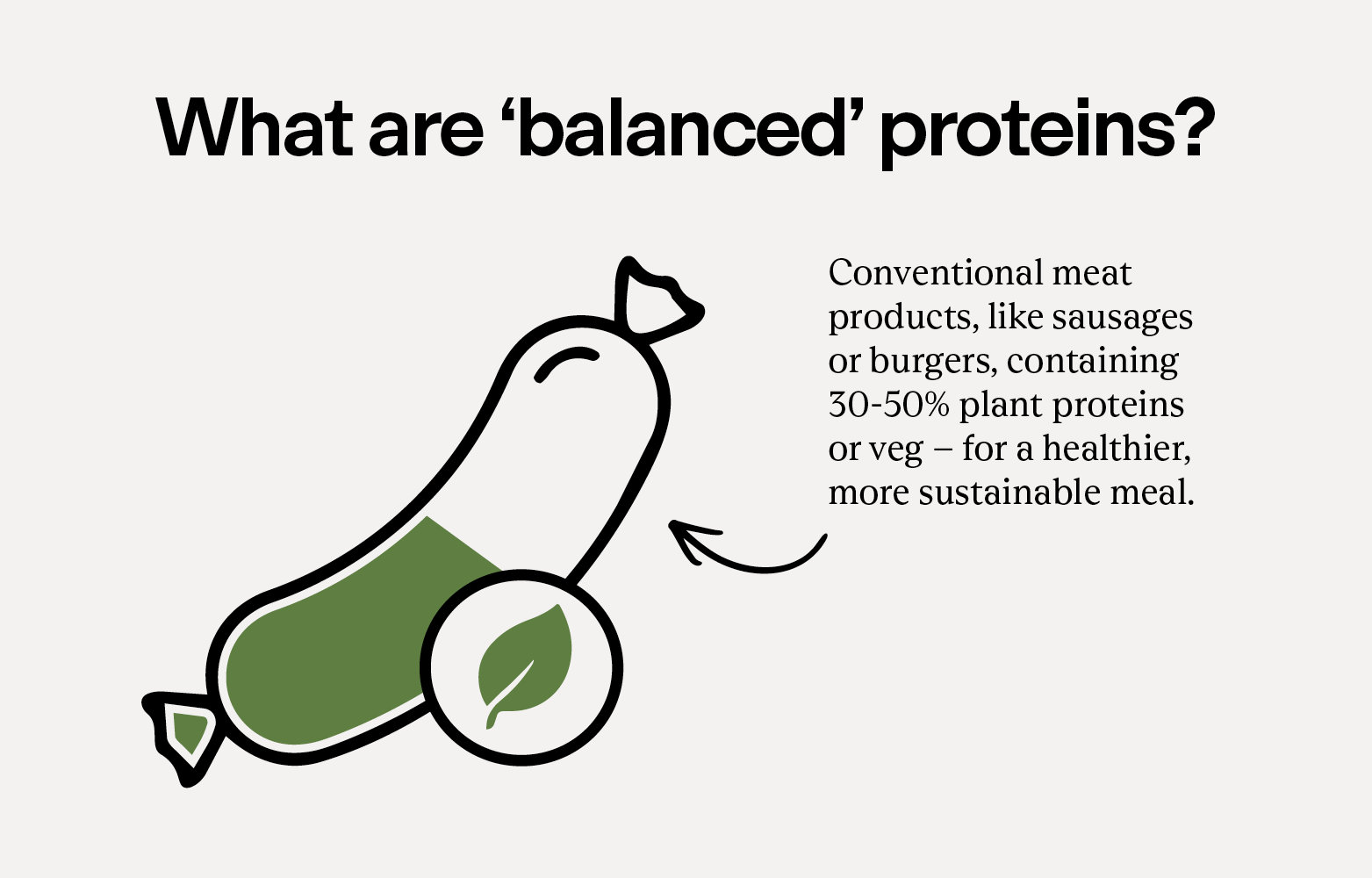
Balanced (or hybrid) meat is a hot topic right now in retail and food service. Some in retail - particularly in the Netherlands, and most recently Lidl GB in the UK - have placed big bets on it as a solution to the cost, health and climate problems caused by the overconsumption of meat.
The question that often hangs over new products or nascent technologies in food is: Could this be a game-changer, or just another trend? And in the case of balanced protein, we can add the question ‘why is this time different?’, after the pre-pandemic wave of hybrid products.
Well, having spoken at the first-ever Hybrid Foods Europe Conference in The Netherlands last week, I have some thoughts.
Here are five takeaways.
With food, taste comes first
Taste is the main barrier to bringing meat eaters on board of this transition. If the meat product you sell is not tasty, it doesn’t sell. Period.
And guess what? Meat blended with plant proteins, mushrooms or mycoprotein (in short, balanced meat) is as tasty, and sometimes even tastier (some blind tests show), than conventional meat.
The tasting rounds at the conference prove that point.
Planetary’s 60% chicken patty blended with 40% mycoprotein (a complete protein) was super juicy and had the same bite as the chicken-only counterpart.
The Meatless hybrid beef burger (50% beef; 20% fat; 30% faba bean) had the same texture and taste as the beef-only burger (80% beef-20% fat). It was the same with the mouthfeel of Scelta’s Blend Beef Burger - 60% beef, 20% mushrooms, 30% Plantify faba beans (26% cheaper; 40% less CO2).
Price is paramount
Meat inflation is here to stay. Our price data analysis has revealed a huge surge (up to 56%) in meat prices across Europe in the past five years, fuelling a widening gap with plant proteins. Our internal modelling suggests that by 2050, red meat prices could jump fourfold due to global warming.
For many consumers, the rational response to that kind of inflation is to switch down to chicken, legumes, or other plant proteins. But a significant share of meat eaters won't make that switch on price alone: they're attached to the taste and texture of beef, and if pure beef (the industry standard is 80% beef-20% fat) becomes unaffordable, they're a flight risk back to cheap, high-impact processed meat rather than a win for plant proteins.
Balanced meat is a way to capture that segment. Take Lidl Netherlands' 500g balanced beef mince (60% beef, 40% plant protein). At €4.99, it’s 26.5% cheaper than the cheapest beef-only mince and it lets committed meat eaters keep the taste they want while cutting their beef climate footprint by 38%, at a price point that undercuts inflation.
It's not the ceiling of what's possible (plant-rich and full switching remain the bigger prize) but for consumers who would otherwise resist that shift entirely, it's a meaningful and immediate reduction. More importantly, it’s a stepping stone in their journey to diversify protein intake. As a bonus, the added plant protein also helps address Europe's fibre deficiency, without requiring any change to consumers' favourite dishes.
A bridge solution for meat eaters and unsatisfied flexitarians
Plant-based meat and dairy products (veggie burgers, sausages, oat milk, plant dairy and chicken nuggets, etc) are doing a great good job in satisfying the dietary needs of vegetarians, vegans and committed flexitarians. But consumer surveys show that there’s a sizable segment of the growing flexitarian cohort in Europe (those consumers actively looking to reduce meat and dairy consumption) that don’t know how to reduce their meat intake because they tried plant-based meat and didn’t repeat.
Moreover, around half of the population in Western and Northern Europe are regular meat eaters. Until new proteins get there in terms of taste and price, it seems reasonable to think that balanced meat and dairy is a palatable proposition for meat eaters.
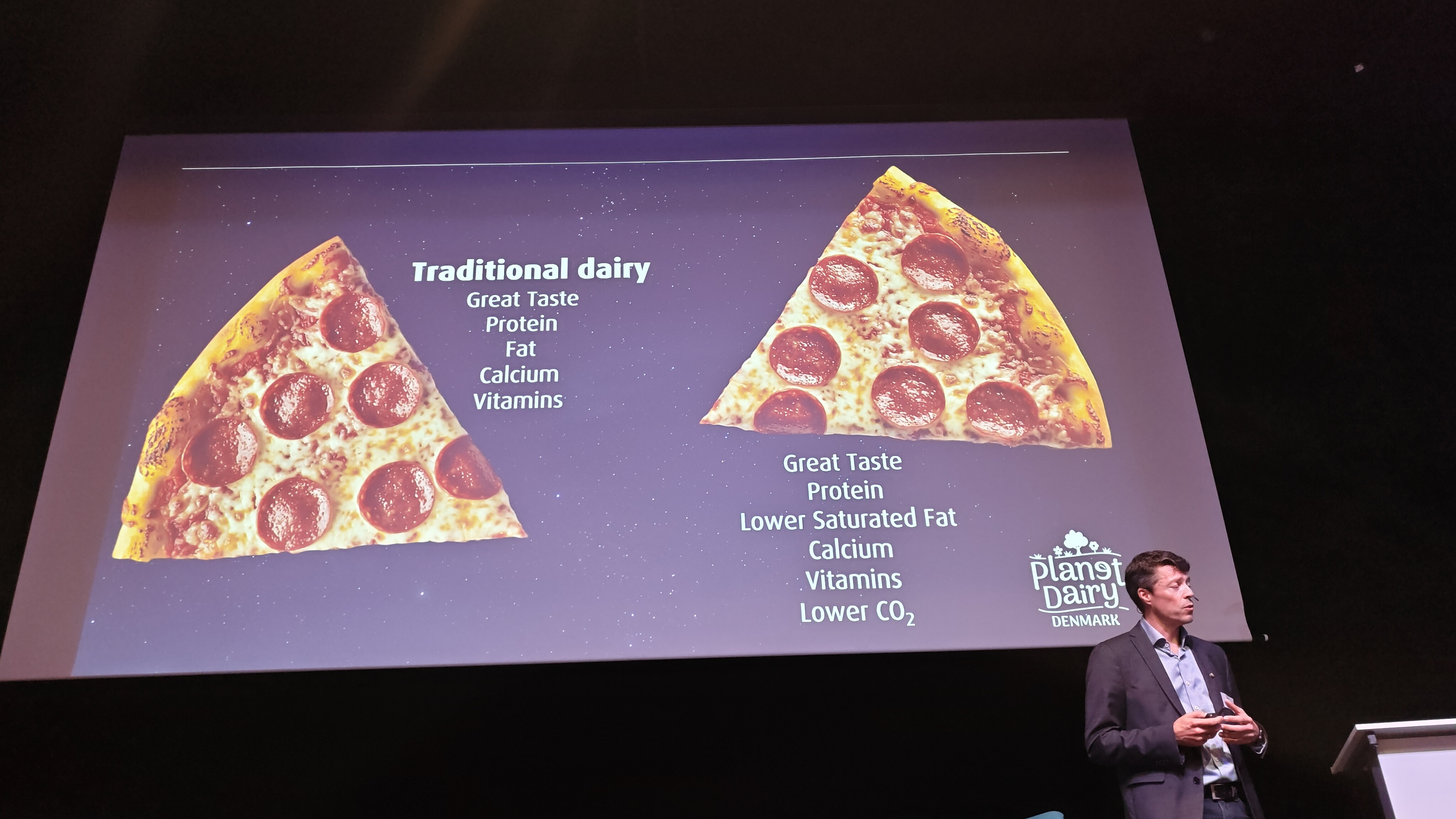
Jakob Skovgaard, CEO of PlanetDairy, articulated a vision that was equally compelling and grounded in pragmatism: As precision fermentation technology continues to progress, blended dairy offers a practical path forward for consumers and businesses seeking to lessen the impact of traditional dairy on climate, biodiversity, health, and animal welfare.
We can bring the meat and dairy industry along the path of achieving protein diversification
This is a very compelling reason to me: for most applications and ingredients today, balanced proteins is a drop-in technology that doesn’t require any changes to the existing way of manufacturing meat products while reducing costs and providing a healthier product to consumers.
A very big meatpacker attending the conference stressed the fact that “meat availability" will be a problem in the near future and that balanced proteins can help in strengthening the resilience of their supply chain. Bringing on board meat and dairy processors could also ensure that there’s actual meat and dairy reduction by replacing the cheapest meat and dairy products with balanced products.
The goal should be for balanced products to occupy the existing shelf space occupied by cheap regular meat today.
Retailers want to push it for cost, health and climate reasons
Retailers face a dilemma: they need to cut meat and dairy sales to hit both Scope 3 emissions targets and Planetary Health Diet goals, but most consumers aren't ready to go fully plant-based.
Balanced proteins are the bridge. They’re another lever retailers can pull to shift consumption without asking shoppers to do it all in one big jump. The retailers at the conference agreed: these products are essential to hitting both their climate and nutrition targets while keeping costs down.
Why is it different this time?
So what is so different today from the wave of blended meat products launched before the pandemic? Four new developments: record-high meat prices; better formulation technology and products; consumers (Gen Z; GLP-1 users) looking for nutrient-dense foods with more fibres and clean labels; increasing industry concern around meat availability in the near future due to climate change.
Balanced meat - a bridge to a lower impact food future
"Game-changer or gimmick?" I came in asking. I left convinced: balanced meat isn't a compromise; it's the fastest bridge we have to a lower-impact food future. The only question left is how fast retailers and meatpackers move to build it.

