.png)
Zinnia Quirós
3
July
2026
Who decides what ends up in your shopping basket? Most of us would probably answer: “me”.
After all, we choose what we eat based on our tastes, our budget, the time we have, our families and our habits.
But that's only half the story.
What we eat, how we eat and how much we pay for it has stopped being, if it ever was, a purely private matter. Food is public health. It is climate action. It is household economics. And right now, the evidence is clear: our food system is failing both people and the planet.
I was invited to speak at unoconcinco, Spain's leading sustainable food forum organised by the Daniel and Nina Carasso Foundation, recently. Every panellist was asked to bring an object to the table.
.png)
Some brought a tractor. Others brought pulses. Someone arrived with a reusable shopping bag.
We brought a miniature supermarket basket.
Standing in front of 150 people, I pulled it out of my bag and asked a simple question:
Who really fills this basket?
We like to think we do.
But behind every shopping basket sits another architect: the supermarket.
Long before we walk through the doors, someone has decided which products get eye-level shelves, which go on promotion, which become own-brand products and which quietly disappear. Supermarkets don't just sell food—they shape diets.
Then I reached into my bag one more time.
Out came Spider-Man:
"With great power comes great responsibility."
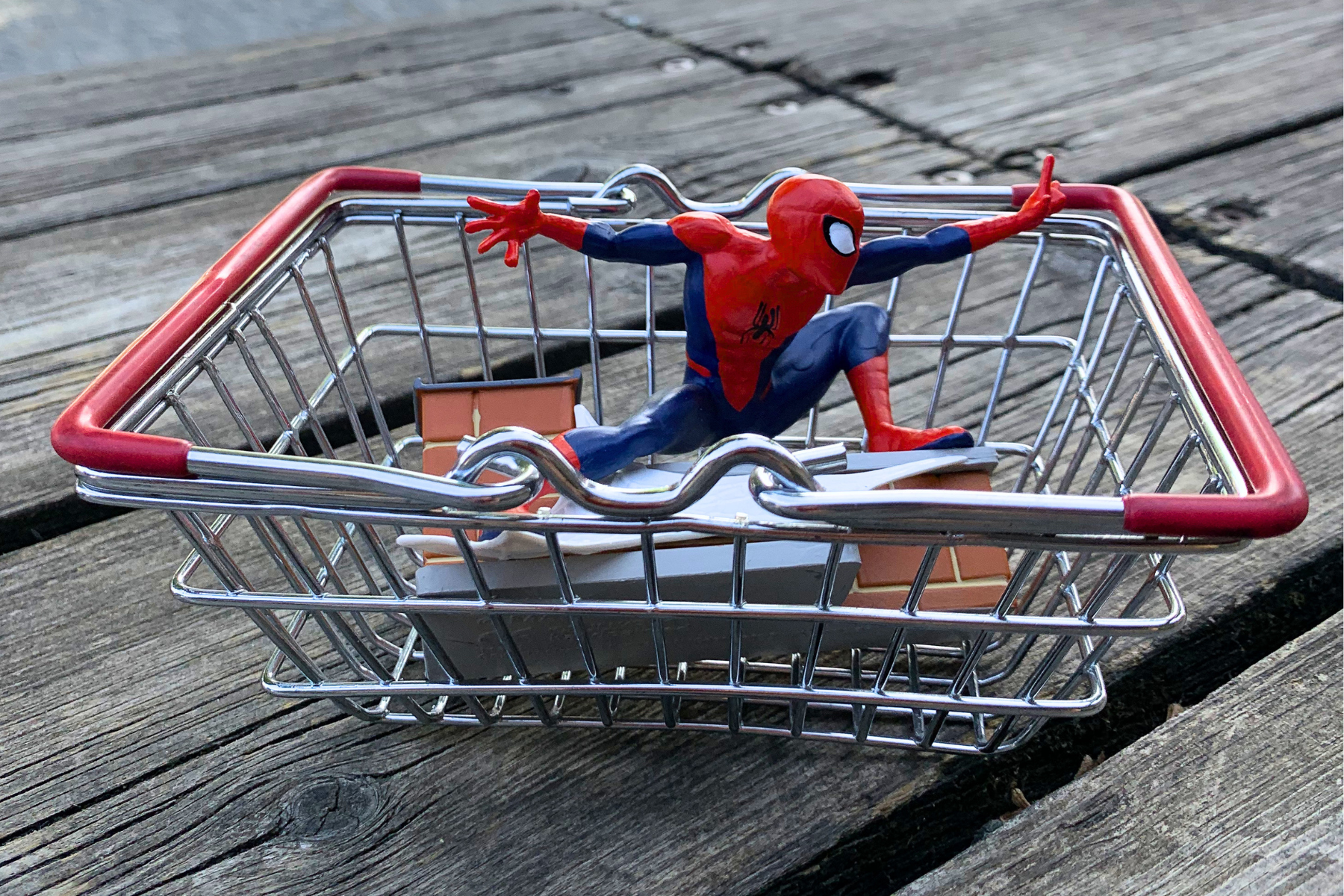
It got a laugh. But it also made the point.
If supermarkets have the power to shape millions of shopping baskets every day, they also have the responsibility, and the opportunity, to make healthy and sustainable food the easiest and most affordable choice.
Science has already told us what that the future looks like. Healthier diets are also more sustainable diets, and they rely on a greater diversity of protein sources: more beans, pulses and other plant proteins, alongside fewer animal products. The challenge isn't knowing what needs to change. It's making those choices the easy and affordable option for everyone.
For too long we've placed the burden almost entirely on consumers, asking people to navigate a food environment that often nudges them in the opposite direction. At Madre Brava, we're working with supermarkets because they have more influence over what ends up on our plates than almost any other actor in the food system.
This isn't about blame. It's about leadership.
As Daniella Vega, Global Senior Vice President Health & Sustainability at Ahold Delhaize, said earlier this year at the What's in Store: Retail and the Future of Protein event in Berlin:
"Make it easy. Make it a habit. Make it a lifestyle."
We couldn't agree more.
Because changing food systems shouldn't depend on superhuman consumers. It should depend on supermarkets using their power to make the healthy and sustainable choice the easy, affordable and everyday choice.